Air Purifier Maintenance Guide: Easy Tips to Keep Your Air Clean and Fresh
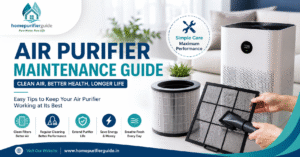
Air Purifier Maintenance Guide
Indoor air pollution is becoming a serious problem in many Indian cities. Dust, smoke, pet hair, pollen, and harmful particles can affect your health every day. This is why many families now use air purifiers at home.
But buying an air purifier is not enough.
If you do not clean and maintain it properly, the purifier may stop working efficiently. Dirty filters can reduce airflow, increase electricity use, and lower air cleaning performance.
Regular maintenance helps your air purifier work better and last longer.
In this easy guide, you will learn simple air purifier maintenance tips that anyone can follow at home.
Why Air Purifier Maintenance is Important
Many people install an air purifier and forget about it for months. This is one of the biggest mistakes.
Air purifiers collect dust, smoke particles, allergens, and bacteria inside their filters. Over time, these filters become dirty and clogged.
A clean air purifier gives:
-
- Better indoor air quality
-
- Improved airflow
-
- Faster dust removal
-
- Reduced allergies
-
- Longer machine life
-
- Lower electricity consumption
Experts say HEPA filters normally need replacement every 6 to 12 months depending on usage and pollution level.
Types of Air Purifier Filters
Before cleaning your purifier, you should understand its filter types.
Pre-Filter
This filter captures large dust particles, hair, and lint.
It is usually washable and easy to clean.
Maintenance Tip
Clean it every 2 to 4 weeks.
HEPA Filter
HEPA filters trap very tiny particles like PM2.5, pollen, smoke, and bacteria.
Most HEPA filters are NOT washable.
Maintenance Tip
Replace it every 6–12 months.
Activated Carbon Filter
This filter removes bad smell, smoke odor, and harmful gases.
Carbon filters usually cannot be washed.
Maintenance Tip
Replace every 3–6 months for best performance.
UV Filter
Some advanced air purifiers use UV light technology to kill bacteria and germs.
Maintenance Tip
Check the UV lamp once every year.
How to Clean an Air Purifier Properly
Cleaning your air purifier is simple if you follow the correct steps.
Turn Off the Purifier
Always switch off and unplug the machine before cleaning. This helps avoid electric shock and damage.
Remove the Filters Carefully
Open the purifier cover slowly.
Take out all filters one by one.
Do not force the filter because HEPA material is delicate.
Clean the Pre-Filter
Most pre-filters are washable.
You can:
-
- Vacuum the dust
-
- Wash with normal water
-
- Dry completely before reinstalling
Never install a wet filter.
Clean the HEPA Filter Carefully
Most HEPA filters should not be washed with water.
You can:
-
- Use a soft vacuum brush
-
- Remove surface dust gently
-
- Avoid strong pressure
If the filter is dark black, damaged, or clogged, replace it immediately.
Wipe the Inside Body
Use a soft microfiber cloth.
Clean:
-
- Air vents
-
- Fan area
-
- Sensor area
-
- Outer body
Do not use harsh chemicals.
Reinstall the Filters
Make sure every filter is:
-
- Completely dry
-
- Installed correctly
-
- Properly locked
Now restart the purifier.
Common Air Purifier Cleaning Mistakes
Many users damage their purifier unknowingly.
Avoid these mistakes:
Washing Non-Washable HEPA Filters
This can destroy filter fibers and reduce filtration efficiency.
Using Wet Filters
Wet filters may create mold and bad smell.
Always dry filters fully before use.
Ignoring Filter Replacement
A clogged filter reduces airflow and cleaning performance.
Cleaning Sensors with Water
Sensitive sensors can stop working if damaged.
Using Strong Detergents
Harsh chemicals can damage the purifier body and filters.
Signs Your Air Purifier Needs Maintenance
Your purifier may need cleaning if you notice:
-
- Weak airflow
-
- Strange smell
-
- Increased dust in room
-
- Loud noise
-
- Allergy symptoms returning
-
- Filter indicator light ON
Experts say dark-colored HEPA filters and poor airflow are major warning signs.
Best Air Purifier Maintenance Schedule
| Maintenance Task | Recommended Time |
| Clean Pre-Filter | Every 2–4 Weeks |
| Wipe Outer Body | Weekly |
| Check Air Sensor | Monthly |
| Replace HEPA Filter | 6–12 Months |
| Replace Carbon Filter | 3–6 Months |
| Full Inspection | Yearly |
Tips to Increase Air Purifier Life
Keep It in Open Space
Do not place it against walls or furniture.
Good airflow improves performance.
Run It Regularly
Running your purifier daily helps maintain better indoor air quality.
Keep Doors and Windows Closed
This reduces outside pollution entry.
Vacuum Your Room Often
Air purifiers work better in cleaner rooms.
Use Original Filters
Cheap duplicate filters may reduce cleaning efficiency.
Air Purifier Maintenance for Delhi Homes
In cities like Delhi, Gurgaon, Noida, and Ghaziabad, pollution levels are very high during winter.
Filters become dirty faster.
Many users in Delhi replace HEPA filters every 3–4 months due to heavy pollution exposure.
If you live in a high-pollution area:
-
- Clean pre-filters more often
-
- Monitor filter color regularly
-
- Use Auto Mode carefully
-
- Replace filters earlier if airflow decreases
Final Thoughts
An air purifier can improve your indoor air quality only when it is maintained properly.
Simple cleaning and timely filter replacement can:
-
- Improve air purification
-
- Reduce allergies
-
- Increase purifier lifespan
-
- Save electricity
-
- Keep your family healthy
Regular maintenance takes only a few minutes but gives long-term benefits.
If you want clean and healthy air at home, never ignore your air purifier maintenance schedule.
FAQs
Can I wash a HEPA filter?
Most HEPA filters are not washable unless the manufacturer specifically mentions it.
How often should I clean my air purifier?
Pre-filters should be cleaned every 2–4 weeks. Full maintenance depends on usage and pollution level.
How do I know my air purifier filter is dirty?
Signs include reduced airflow, bad smell, loud noise, and visible dark dust on the filter.
Can dirty filters make air quality worse?
Yes. Old clogged filters can reduce cleaning efficiency and may spread trapped pollutants.