
How to Choose the Right Water Purifier (RO, UV, UF): A Simple Buying Guide for Every Home
Introduction
Clean drinking water is one of the most important things for a healthy family. But with so many water purifiers available today, choosing the right one can feel confusing. Should you buy an RO water purifier? Is a UV purifier enough? Or is a UF purifier the better option?
The answer depends on the quality of the water that comes to your home. A purifier that works well in one house may not be the best choice for another. That is why understanding your water source and its quality is the first step before making a purchase.
In this guide, we’ll explain the difference between RO, UV, and UF water purifiers in simple language. You’ll also learn which purifier is suitable for your home, what mistakes to avoid, and how to make a smart buying decision without spending extra money.
Whether you use municipal water, borewell water, or tanker water, this guide will help you choose the right water purifier with confidence.
Why Choosing the Right Water Purifier Matters
Water may look clean, but it can still contain harmful impurities such as bacteria, viruses, heavy metals, chemicals, and dissolved salts. Drinking contaminated water regularly can affect your family’s health and increase the risk of waterborne diseases.
A good water purifier removes unwanted contaminants while keeping your drinking water safe and pleasant to taste.
However, buying the wrong purifier can lead to unnecessary expenses, higher maintenance costs, and even poor water quality. That’s why understanding the different purification technologies is important before making a purchase.
Know Your Water Source First
Before comparing different water purifiers, identify where your drinking water comes from.
The most common water sources include:
- Municipal tap water
- Borewell water
- Tanker water
- Well water
- Mixed water supply
Each water source has different levels of impurities. For example, borewell water often contains high levels of dissolved salts, while municipal water is usually treated but may still carry bacteria if pipelines are old or damaged.
If possible, get your water tested or check its TDS (Total Dissolved Solids) level. This small step can save you from buying the wrong purifier.
What is TDS and Why is it Important?
TDS stands for Total Dissolved Solids. It measures the amount of minerals, salts, and other dissolved substances in water.
A TDS meter is affordable and can quickly tell you whether your water has a low or high mineral content.
Generally:
- Low TDS water contains fewer dissolved minerals.
- High TDS water contains more dissolved salts and minerals.
If your water has a very high TDS level, an RO purifier is usually the preferred choice because it is designed to reduce excess dissolved solids.
For water with a low TDS level but possible bacterial contamination, UV or UF purification may be sufficient, depending on the source and quality of the water.
What is an RO Water Purifier?
RO stands for Reverse Osmosis.
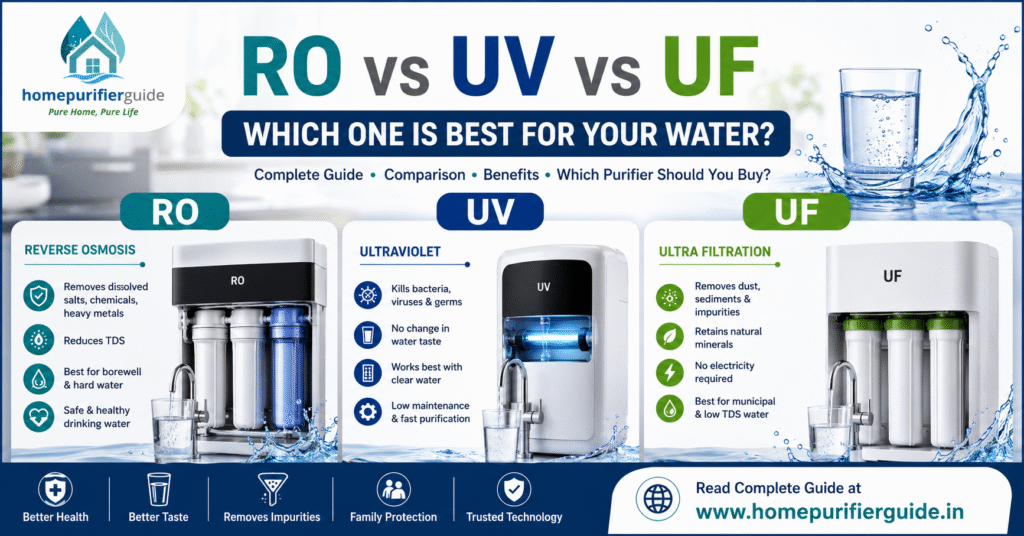
An RO purifier uses a special membrane that removes dissolved salts, heavy metals, fluoride, arsenic, nitrates, and many other impurities from water.
Benefits of RO Water Purifiers
- Removes excess TDS effectively.
- Improves the taste of salty water.
- Removes many harmful dissolved contaminants.
- Suitable for borewell and hard water.
- Ideal for homes with high TDS water.
Things to Keep in Mind
RO systems generally require electricity and regular filter maintenance. They may also reject some water during the purification process, although many modern models are designed to reduce water wastage.
If your water already has a low TDS level, buying an RO purifier may not always be necessary.
What is a UV Water Purifier?
UV stands for Ultraviolet Purification.
Instead of removing dissolved minerals, a UV purifier uses ultraviolet light to deactivate harmful bacteria, viruses, and other microorganisms present in water.
The taste and mineral content of the water remain unchanged because UV technology focuses on killing germs rather than filtering dissolved impurities.
Benefits of UV Water Purifiers
- Effective against bacteria and viruses.
- Fast purification process.
- Retains natural minerals.
- Suitable for treated municipal water with low TDS.
- Low maintenance compared to some other purification systems.
Limitations
UV purification cannot remove dissolved salts, heavy metals, or mud particles. If your water contains high TDS or visible impurities, a UV purifier alone may not be enough.
What is a UF Water Purifier?
UF stands for Ultrafiltration.
A UF purifier uses a hollow fiber membrane to remove suspended particles, dirt, and many microorganisms from water.
One of its biggest advantages is that it does not require electricity to operate, making it a practical option in areas with frequent power cuts.
Benefits of UF Water Purifiers
- Works without electricity.
- Removes dust and suspended particles.
- Helps reduce bacteria and other microorganisms.
- Lower maintenance costs.
- Suitable for areas with low TDS water.
Limitations
UF technology cannot reduce dissolved salts or high TDS levels. If your water is hard or contains excess minerals, a UF purifier alone may not provide the desired water quality.
RO vs UV vs UF: Which One Should You Choose?
The best water purifier is not the most expensive one. It is the one that matches your water quality.
Here’s a simple way to decide:
- Choose RO if your home receives borewell water or water with high TDS.
- Choose UV if you receive treated municipal water and want protection against bacteria and viruses.
- Choose UF if your water has low TDS but contains visible particles or suspended impurities and electricity is a concern.
Many modern water purifiers combine RO + UV + UF technologies to provide multiple layers of purification. These models are popular because they can handle different types of water conditions and offer added peace of mind for families.
Common Mistakes People Make When Buying a Water Purifier
Buying a water purifier without checking your water quality is one of the biggest mistakes. Many people simply choose a popular brand or buy the most expensive model, thinking it will automatically be the best option. In reality, the right purifier depends on the type of water available in your home.
Here are some common mistakes to avoid.
- Buying an RO Purifier Without Checking TDS
Many homeowners believe every house needs an RO purifier. That’s not true.
If your water already has a low TDS level, an RO purifier may not be necessary. In such cases, a UV or UF purifier could be a better and more economical choice.
Always test your water before making a decision.
- Ignoring the Water Source
Municipal water, borewell water, tanker water, and well water all have different characteristics.
A purifier that works perfectly with municipal water may not perform well with borewell water. Understanding your water source helps you choose the right purification technology.
- Choosing Only by Price
A lower price may save money today, but poor filtration or expensive maintenance can cost more in the long run.
Instead of looking only at the price tag, compare:
- Purification technology
- Filter life
- Annual maintenance cost
- Warranty
- Service availability
- Storage capacity
- Not Checking Service Support
Even the best water purifier needs regular servicing and filter replacement.
Before purchasing, check whether the brand has authorized service centers in your city. Easy access to service can save time and prevent unnecessary problems later.
Features to Look for in a Water Purifier
Modern water purifiers come with many useful features. While not every feature is essential, some can improve convenience and performance.
Multi-Stage Purification
A purifier with multiple purification stages offers better protection against different types of contaminants.
Many premium models combine:
- RO
- UV
- UF
- Sediment Filter
- Activated Carbon Filter
This combination helps remove dissolved impurities, harmful microorganisms, bad odor, chlorine, and visible particles.
TDS Controller
Some RO water purifiers include a TDS controller.
This feature helps maintain a balanced mineral level after purification, making the water taste more natural.
Storage Tank
If your area experiences frequent power cuts, choose a purifier with sufficient storage capacity.
For a family of four to six members, an 8 to 10-liter storage tank is usually a practical option.
Filter Change Indicator
A filter replacement indicator reminds you when it’s time to replace the filters.
Changing filters on time helps maintain good water quality and improves the lifespan of the purifier.
Energy Efficiency
If you’re buying an electric purifier, look for energy-efficient models that consume less electricity while delivering reliable performance.
How Often Should You Service Your Water Purifier?
Regular maintenance is essential for safe drinking water.
Although the exact schedule depends on the model and water quality, these general guidelines can help:
- Clean the storage tank regularly.
- Replace filters as recommended by the manufacturer.
- Schedule periodic servicing.
- Check for unusual taste, odor, or slow water flow.
Ignoring maintenance can reduce purification efficiency and affect water quality.
Which Water Purifier is Best for Different Water Sources?
Municipal Water
If your municipal water has a low TDS level, a UV or UV + UF purifier is often sufficient.
Borewell Water
Borewell water usually contains higher TDS and dissolved minerals.
An RO purifier or an RO + UV + UF combination is generally a better choice.
Tanker Water
The quality of tanker water can vary significantly.
A multi-stage purifier with RO, UV, and UF technologies offers better protection against different contaminants.
Well Water
Well water may contain suspended particles and microorganisms.
The most suitable purifier depends on the water test report and TDS level.
Tips to Increase the Life of Your Water Purifier
A few simple habits can help your purifier perform efficiently for years.
- Replace filters on time.
- Use genuine replacement parts.
- Clean the storage tank regularly.
- Avoid delaying scheduled maintenance.
- Keep the purifier installed in a clean and dry location.
- Get your water quality tested every year, especially if your water source changes.
These small steps improve performance and reduce long-term maintenance costs.
Frequently Asked Questions
Is RO water safe for daily drinking?
Yes. RO-purified water is safe when it is suitable for your water source and the purifier is maintained properly.
Which purifier is best for borewell water?
If the TDS level is high, an RO purifier is generally the preferred option because it helps reduce excess dissolved salts and impurities.
Is a UV purifier enough for municipal water?
If the municipal water has a low TDS level and is already treated, a UV purifier may be sufficient. However, testing your water before purchasing is always recommended.
Does a UF purifier require electricity?
No. Most UF water purifiers work without electricity, making them useful in areas with frequent power outages.
How do I know which purifier is right for my home?
The easiest way is to identify your water source and measure its TDS level. Once you know your water quality, choosing the right purification technology becomes much easier.
Final Thoughts
Choosing the right water purifier doesn’t have to be complicated.
Instead of following advertisements or buying the most expensive model, focus on your home’s actual water quality. A simple water test can help you understand whether you need an RO, UV, or UF purifier.
If your water has a high TDS level, an RO purifier is often the right choice. For treated municipal water with low TDS, a UV purifier may be enough. If electricity is a concern and your water has low TDS, a UF purifier can be a practical solution.
Every family has different water needs, so there is no one-size-fits-all solution.
Taking a little time to understand your water source today can help you enjoy cleaner, safer, and better-tasting drinking water for years to come.
At Home Purifier Guide, our goal is to help you make informed decisions with easy-to-understand buying guides, honest comparisons, and practical tips. Explore more water purifier reviews and expert advice to find the perfect purifier for your home.