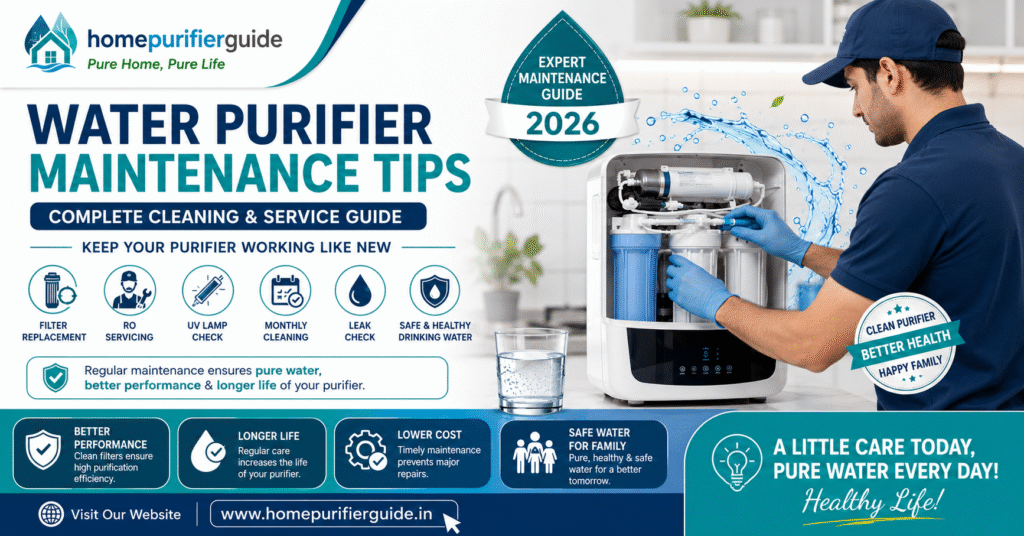
Water purifier maintenance tips for keeping RO water purifiers clean and working efficiently
Water Purifier Maintenance Tips – Keep Your Drinking Water Safe & Your Purifier Working Like New
Clean drinking water is one of the most important parts of a healthy lifestyle. A good water purifier helps remove impurities and provides safe water for your family. However, simply installing a water purifier is not enough. Like any home appliance, it needs regular care and maintenance to work efficiently.
Many people forget about their water purifier after installation. They continue using it for months or even years without cleaning or replacing the filters. This can reduce the purifier’s performance and may affect the quality of the drinking water.
Regular maintenance not only helps improve purification performance but also increases the life of your water purifier and reduces unexpected repair costs.
In this guide, you’ll learn simple and practical water purifier maintenance tips that every homeowner should know.
Why Water Purifier Maintenance is Important
A water purifier continuously filters dust, dirt, bacteria, dissolved impurities, and other contaminants from your water. Over time, these impurities build up inside the filters and purification system.
If maintenance is ignored, you may notice:
Reduced water flow
Bad taste or unpleasant smell
Slow purification
Higher electricity consumption
Frequent service issues
Reduced filter life
Proper maintenance ensures that your purifier continues to provide clean and safe drinking water every day.
How Often Should You Service a Water Purifier?
The servicing schedule depends on several factors, including:
Water quality
Daily water consumption
Purifier type
Filter condition
Manufacturer’s recommendations
As a general rule:
Clean the exterior every week.
Inspect the purifier once a month.
Replace filters according to the manufacturer’s maintenance schedule or when indicated by the purifier.
Get professional servicing at the intervals recommended by the manufacturer.
If your home uses borewell water or water with a high TDS level, your purifier may require more frequent maintenance.
Signs Your Water Purifier Needs Servicing
A water purifier usually gives warning signs before its performance starts to decline.
Watch for these common symptoms.
1. Slow Water Flow
If clean water is coming out much slower than usual, the filters may be clogged.
This is one of the most common signs that servicing is needed.
2. Bad Taste or Odor
Fresh drinking water should taste clean.
If the water starts tasting unusual or develops an unpleasant smell, it’s time to inspect the purifier.
3. Unusual Noise
Modern water purifiers generally operate quietly.
If you notice unusual sounds during operation, it may indicate that a component requires attention.
4. Filter Replacement Indicator
Many newer water purifiers include smart filter replacement indicators.
If the indicator turns on, follow the manufacturer’s recommendations for inspection or filter replacement.
5. Water Leakage
Water leaking from the purifier should never be ignored.
Leaks may occur due to loose fittings, worn-out seals, or damaged components. If you notice leakage, arrange servicing promptly.
RO Water Purifier Maintenance Tips
RO (Reverse Osmosis) purifiers contain several filters that work together to improve water quality.
To keep them performing well:
Replace Filters on Time
RO systems typically include multiple filters.
Following the recommended replacement schedule helps maintain purification performance and water quality.
Keep the Storage Tank Clean
The storage tank should be cleaned periodically to help prevent dirt and residue from building up.
Check Water Pressure
Low water pressure can reduce the performance of an RO purifier.
If you notice a significant drop in pressure, have the system checked by a qualified technician.
Schedule Professional Servicing
Regular professional maintenance helps inspect the membrane, filters, tubing, and other internal components.
UV Water Purifier Maintenance Tips
UV water purifiers use ultraviolet light to help deactivate bacteria and viruses.
To keep the system working efficiently:
Clean the purifier regularly.
Replace the UV lamp according to the manufacturer’s maintenance schedule.
Keep the quartz sleeve clean if your model includes one.
Ensure the unit is serviced when recommended.
UF Water Purifier Maintenance Tips
UF (Ultrafiltration) purifiers require less maintenance than RO systems but still need periodic care.
Helpful tips include:
Clean the filter housing regularly.
Check for blockages.
Wash or replace filters according to the manufacturer’s instructions.
Inspect the purifier for leaks.
Regular cleaning helps maintain good water flow and consistent performance.
Daily Water Purifier Care Tips
Simple daily habits can improve the life of your purifier.
Keep the Area Clean
Install the purifier in a clean, dry, and well-ventilated location.
Avoid placing it near excessive heat or direct sunlight.
Use the Purifier Regularly
If the purifier remains unused for several days, follow the manufacturer’s instructions before using it again.
Check for Leaks
A quick visual inspection takes only a few seconds.
Early detection of small leaks can help prevent larger repair issues later.
Avoid Rough Handling
Do not place heavy objects on the purifier.
Handle the taps and buttons carefully to avoid unnecessary damage.
Weekly Cleaning Tips
Cleaning the exterior regularly helps maintain hygiene and keeps the purifier looking new.
You can:
Wipe the outer surface with a soft cloth.
Clean the dispensing area.
Remove dust from air vents (if present).
Keep the surrounding countertop clean.
Avoid using harsh chemicals or abrasive cleaning materials unless recommended by the manufacturer.
Simple Maintenance Habits That Save Money
Good maintenance doesn’t have to be difficult.
Following a few simple habits can help:
Improve water quality.
Extend filter life.
Reduce repair costs.
Increase the lifespan of your purifier.
Keep your family supplied with safe drinking water.
A few minutes of care each week can make a big difference over time.
Monthly Water Purifier Maintenance Checklist
Regular maintenance doesn’t have to be complicated. Spending a few minutes each month checking your water purifier can help prevent unexpected problems and keep it working efficiently.
Here’s a simple checklist you can follow:
✔ Check the water flow.
✔ Taste the purified water.
✔ Look for any water leakage.
✔ Clean the outer body of the purifier.
✔ Clean the water dispensing tap.
✔ Inspect the power cable and plug.
✔ Check for unusual sounds during operation.
✔ Make sure the storage tank is clean.
✔ Review the filter replacement schedule.
✔ If your purifier has a filter change indicator, check whether it shows that maintenance is due.
Following this routine every month can help identify small issues before they become major repairs.
Water Purifier Filter Replacement Guide
Filters are the most important part of any water purifier. They continuously remove dust, dirt, chemicals, bacteria, and other impurities from the water.
Over time, these filters become less effective and need replacement.
Instead of waiting for poor performance, follow the maintenance schedule recommended by the manufacturer.
Common filter types include:
Sediment Filter
Removes dust, sand, and larger particles from water.
Activated Carbon Filter
Helps reduce chlorine, bad taste, and unpleasant odors.
RO Membrane
The RO membrane helps reduce dissolved salts, heavy metals, and high TDS from water.
UV Lamp
In UV purifiers, the UV lamp should be inspected and replaced according to the manufacturer’s recommended schedule to maintain effective disinfection.
UF Membrane
UF membranes should be cleaned or replaced as recommended by the manufacturer, depending on water quality and usage.
Common Water Purifier Problems and Their Solutions
Even a high-quality water purifier may experience occasional issues. Knowing the common problems can help you take quick action.
Problem 1: Slow Water Flow
Possible Reasons
Dirty filters
Low water pressure
Blocked membrane
What You Can Do
Check the filters.
Ensure there is sufficient water pressure.
Arrange professional servicing if the problem continues.
Problem 2: Bad Taste or Smell
Possible Reasons
Old carbon filter
Dirty storage tank
Delayed maintenance
Solution
Clean the storage tank.
Replace the necessary filters as recommended.
Schedule a complete service if needed.
Problem 3: Water Leakage
Possible Reasons
Loose pipe connection
Worn-out seals
Damaged fittings
Solution
Turn off the water supply.
Check for visible loose connections.
Contact an authorized service technician if the leak continues.
Problem 4: Purifier Not Turning On
Possible Reasons
Power supply issue
Loose electrical connection
Internal fault
Solution
Check the power outlet.
Ensure the plug is properly connected.
Contact customer support if the issue remains.
Easy DIY Maintenance Tips
Some basic maintenance can be done safely at home.
Keep the Exterior Clean
Wipe the purifier using a soft microfiber cloth to remove dust and fingerprints.
Clean the Water Tap
The dispensing tap is touched frequently, so clean it regularly using a soft cloth and mild cleaning solution if recommended by the manufacturer.
Keep the Area Dry
Avoid water collecting around the purifier.
A dry installation area helps reduce the chances of electrical issues and mold growth.
Monitor Water Quality
If you notice a sudden change in water taste, smell, or appearance, stop using the purifier until it has been inspected.
Mistakes to Avoid
Many people unknowingly reduce the life of their water purifier by making simple mistakes.
Avoid these common errors:
Ignoring Filter Replacement
Using old filters for too long reduces purification efficiency.
Delaying Servicing
Waiting until the purifier stops working often leads to higher repair costs.
Using Duplicate Filters
Always choose genuine replacement filters that are compatible with your purifier model.
Skipping Water Testing
Water quality can change over time. Periodic testing helps ensure your purifier remains suitable for your water source.
Cleaning with Harsh Chemicals
Strong cleaning agents can damage the purifier’s body and internal components. Use only cleaning methods recommended by the manufacturer.
When Should You Call a Professional?
Some issues require expert attention.
Contact an authorized service technician if you notice:
Continuous water leakage
No purified water output
Very slow purification after basic checks
Unusual noise from the purifier
Electrical faults
Error indicators that do not reset
Persistent changes in water taste or odor
Regular professional servicing can help identify worn parts before they fail.
Frequently Asked Questions (FAQs)
How often should I clean my water purifier?
Clean the exterior weekly and inspect the purifier every month. Follow the manufacturer’s recommendations for internal cleaning and servicing.
How do I know if the filter needs replacing?
Many modern purifiers have a filter replacement indicator. You may also notice slower water flow, changes in taste, or reduced performance.
Can I clean the RO membrane myself?
Most RO membranes should be serviced or replaced by trained technicians. Refer to the manufacturer’s instructions before attempting any maintenance.
Is annual servicing necessary?
Regular servicing is recommended because it helps maintain purification performance and extends the life of the purifier.
Does maintenance improve water quality?
Yes. Timely cleaning, filter replacement, and servicing help ensure the purifier continues to provide clean and safe drinking water.
Final Maintenance Tips
A water purifier is an important investment in your family’s health. Taking care of it doesn’t require much time, but it does require consistency.
Remember these simple habits:
Clean the purifier regularly.
Replace filters on time.
Check for leaks and unusual sounds.
Keep the storage tank hygienic.
Use genuine replacement parts.
Follow the manufacturer’s maintenance schedule.
Schedule professional servicing when needed.
Water Purifier Maintenance Tips – Keep Your Drinking Water Safe & Your Purifier Working Like New
Clean drinking water is one of the most important parts of a healthy lifestyle. A good water purifier helps remove impurities and provides safe water for your family. However, simply installing a water purifier is not enough. Like any home appliance, it needs regular care and maintenance to work efficiently.
Many people forget about their water purifier after installation. They continue using it for months or even years without cleaning or replacing the filters. This can reduce the purifier’s performance and may affect the quality of the drinking water.
Regular maintenance not only helps improve purification performance but also increases the life of your water purifier and reduces unexpected repair costs.
In this guide, you’ll learn simple and practical water purifier maintenance tips that every homeowner should know.
Why Water Purifier Maintenance is Important
A water purifier continuously filters dust, dirt, bacteria, dissolved impurities, and other contaminants from your water. Over time, these impurities build up inside the filters and purification system.
If maintenance is ignored, you may notice:
Reduced water flow
Bad taste or unpleasant smell
Slow purification
Higher electricity consumption
Frequent service issues
Reduced filter life
Proper maintenance ensures that your purifier continues to provide clean and safe drinking water every day.
How Often Should You Service a Water Purifier?
The servicing schedule depends on several factors, including:
Water quality
Daily water consumption
Purifier type
Filter condition
Manufacturer’s recommendations
As a general rule:
Clean the exterior every week.
Inspect the purifier once a month.
Replace filters according to the manufacturer’s maintenance schedule or when indicated by the purifier.
Get professional servicing at the intervals recommended by the manufacturer.
If your home uses borewell water or water with a high TDS level, your purifier may require more frequent maintenance.
Signs Your Water Purifier Needs Servicing
A water purifier usually gives warning signs before its performance starts to decline.
Watch for these common symptoms.
1. Slow Water Flow
If clean water is coming out much slower than usual, the filters may be clogged.
This is one of the most common signs that servicing is needed.
2. Bad Taste or Odor
Fresh drinking water should taste clean.
If the water starts tasting unusual or develops an unpleasant smell, it’s time to inspect the purifier.
3. Unusual Noise
Modern water purifiers generally operate quietly.
If you notice unusual sounds during operation, it may indicate that a component requires attention.
4. Filter Replacement Indicator
Many newer water purifiers include smart filter replacement indicators.
If the indicator turns on, follow the manufacturer’s recommendations for inspection or filter replacement.
5. Water Leakage
Water leaking from the purifier should never be ignored.
Leaks may occur due to loose fittings, worn-out seals, or damaged components. If you notice leakage, arrange servicing promptly.
RO Water Purifier Maintenance Tips
RO (Reverse Osmosis) purifiers contain several filters that work together to improve water quality.
To keep them performing well:
Replace Filters on Time
RO systems typically include multiple filters.
Following the recommended replacement schedule helps maintain purification performance and water quality.
Keep the Storage Tank Clean
The storage tank should be cleaned periodically to help prevent dirt and residue from building up.
Check Water Pressure
Low water pressure can reduce the performance of an RO purifier.
If you notice a significant drop in pressure, have the system checked by a qualified technician.
Schedule Professional Servicing
Regular professional maintenance helps inspect the membrane, filters, tubing, and other internal components.
UV Water Purifier Maintenance Tips
UV water purifiers use ultraviolet light to help deactivate bacteria and viruses.
To keep the system working efficiently:
Clean the purifier regularly.
Replace the UV lamp according to the manufacturer’s maintenance schedule.
Keep the quartz sleeve clean if your model includes one.
Ensure the unit is serviced when recommended.
UF Water Purifier Maintenance Tips
UF (Ultrafiltration) purifiers require less maintenance than RO systems but still need periodic care.
Helpful tips include:
Clean the filter housing regularly.
Check for blockages.
Wash or replace filters according to the manufacturer’s instructions.
Inspect the purifier for leaks.
Regular cleaning helps maintain good water flow and consistent performance.
Daily Water Purifier Care Tips
Simple daily habits can improve the life of your purifier.
Keep the Area Clean
Install the purifier in a clean, dry, and well-ventilated location.
Avoid placing it near excessive heat or direct sunlight.
Use the Purifier Regularly
If the purifier remains unused for several days, follow the manufacturer’s instructions before using it again.
Check for Leaks
A quick visual inspection takes only a few seconds.
Early detection of small leaks can help prevent larger repair issues later.
Avoid Rough Handling
Do not place heavy objects on the purifier.
Handle the taps and buttons carefully to avoid unnecessary damage.
Weekly Cleaning Tips
Cleaning the exterior regularly helps maintain hygiene and keeps the purifier looking new.
You can:
Wipe the outer surface with a soft cloth.
Clean the dispensing area.
Remove dust from air vents (if present).
Keep the surrounding countertop clean.
Avoid using harsh chemicals or abrasive cleaning materials unless recommended by the manufacturer.
Simple Maintenance Habits That Save Money
Good maintenance doesn’t have to be difficult.
Following a few simple habits can help:
Improve water quality.
Extend filter life.
Reduce repair costs.
Increase the lifespan of your purifier.
Keep your family supplied with safe drinking water.
A few minutes of care each week can make a big difference over time.
Monthly Water Purifier Maintenance Checklist
Regular maintenance doesn’t have to be complicated. Spending a few minutes each month checking your water purifier can help prevent unexpected problems and keep it working efficiently.
Here’s a simple checklist you can follow:
✔ Check the water flow.
✔ Taste the purified water.
✔ Look for any water leakage.
✔ Clean the outer body of the purifier.
✔ Clean the water dispensing tap.
✔ Inspect the power cable and plug.
✔ Check for unusual sounds during operation.
✔ Make sure the storage tank is clean.
✔ Review the filter replacement schedule.
✔ If your purifier has a filter change indicator, check whether it shows that maintenance is due.
Following this routine every month can help identify small issues before they become major repairs.
Water Purifier Filter Replacement Guide
Filters are the most important part of any water purifier. They continuously remove dust, dirt, chemicals, bacteria, and other impurities from the water.
Over time, these filters become less effective and need replacement.
Instead of waiting for poor performance, follow the maintenance schedule recommended by the manufacturer.
Common filter types include:
Sediment Filter
Removes dust, sand, and larger particles from water.
Activated Carbon Filter
Helps reduce chlorine, bad taste, and unpleasant odors.
RO Membrane
The RO membrane helps reduce dissolved salts, heavy metals, and high TDS from water.
UV Lamp
In UV purifiers, the UV lamp should be inspected and replaced according to the manufacturer’s recommended schedule to maintain effective disinfection.
UF Membrane
UF membranes should be cleaned or replaced as recommended by the manufacturer, depending on water quality and usage.
Common Water Purifier Problems and Their Solutions
Even a high-quality water purifier may experience occasional issues. Knowing the common problems can help you take quick action.
Problem 1: Slow Water Flow
Possible Reasons
Dirty filters
Low water pressure
Blocked membrane
What You Can Do
Check the filters.
Ensure there is sufficient water pressure.
Arrange professional servicing if the problem continues.
Problem 2: Bad Taste or Smell
Possible Reasons
Old carbon filter
Dirty storage tank
Delayed maintenance
Solution
Clean the storage tank.
Replace the necessary filters as recommended.
Schedule a complete service if needed.
Problem 3: Water Leakage
Possible Reasons
Loose pipe connection
Worn-out seals
Damaged fittings
Solution
Turn off the water supply.
Check for visible loose connections.
Contact an authorized service technician if the leak continues.
Problem 4: Purifier Not Turning On
Possible Reasons
Power supply issue
Loose electrical connection
Internal fault
Solution
Check the power outlet.
Ensure the plug is properly connected.
Contact customer support if the issue remains.
Easy DIY Maintenance Tips
Some basic maintenance can be done safely at home.
Keep the Exterior Clean
Wipe the purifier using a soft microfiber cloth to remove dust and fingerprints.
Clean the Water Tap
The dispensing tap is touched frequently, so clean it regularly using a soft cloth and mild cleaning solution if recommended by the manufacturer.
Keep the Area Dry
Avoid water collecting around the purifier.
A dry installation area helps reduce the chances of electrical issues and mold growth.
Monitor Water Quality
If you notice a sudden change in water taste, smell, or appearance, stop using the purifier until it has been inspected.
Mistakes to Avoid
Many people unknowingly reduce the life of their water purifier by making simple mistakes.
Avoid these common errors:
Ignoring Filter Replacement
Using old filters for too long reduces purification efficiency.
Delaying Servicing
Waiting until the purifier stops working often leads to higher repair costs.
Using Duplicate Filters
Always choose genuine replacement filters that are compatible with your purifier model.
Skipping Water Testing
Water quality can change over time. Periodic testing helps ensure your purifier remains suitable for your water source.
Cleaning with Harsh Chemicals
Strong cleaning agents can damage the purifier’s body and internal components. Use only cleaning methods recommended by the manufacturer.
When Should You Call a Professional?
Some issues require expert attention.
Contact an authorized service technician if you notice:
Continuous water leakage
No purified water output
Very slow purification after basic checks
Unusual noise from the purifier
Electrical faults
Error indicators that do not reset
Persistent changes in water taste or odor
Regular professional servicing can help identify worn parts before they fail.
Frequently Asked Questions (FAQs)
How often should I clean my water purifier?
Clean the exterior weekly and inspect the purifier every month. Follow the manufacturer’s recommendations for internal cleaning and servicing.
How do I know if the filter needs replacing?
Many modern purifiers have a filter replacement indicator. You may also notice slower water flow, changes in taste, or reduced performance.
Can I clean the RO membrane myself?
Most RO membranes should be serviced or replaced by trained technicians. Refer to the manufacturer’s instructions before attempting any maintenance.
Is annual servicing necessary?
Regular servicing is recommended because it helps maintain purification performance and extends the life of the purifier.
Does maintenance improve water quality?
Yes. Timely cleaning, filter replacement, and servicing help ensure the purifier continues to provide clean and safe drinking water.
Final Maintenance Tips
A water purifier is an important investment in your family’s health. Taking care of it doesn’t require much time, but it does require consistency.
Remember these simple habits:
Clean the purifier regularly.
Replace filters on time.
Check for leaks and unusual sounds.
Keep the storage tank hygienic.
Use genuine replacement parts.
Follow the manufacturer’s maintenance schedule.
Schedule professional servicing when needed.
Water Purifier Maintenance Tips – Keep Your Drinking Water Safe & Your Purifier Working Like New
Clean drinking water is one of the most important parts of a healthy lifestyle. A good water purifier helps remove impurities and provides safe water for your family. However, simply installing a water purifier is not enough. Like any home appliance, it needs regular care and maintenance to work efficiently.
Many people forget about their water purifier after installation. They continue using it for months or even years without cleaning or replacing the filters. This can reduce the purifier’s performance and may affect the quality of the drinking water.
Regular maintenance not only helps improve purification performance but also increases the life of your water purifier and reduces unexpected repair costs.
In this guide, you’ll learn simple and practical water purifier maintenance tips that every homeowner should know.
Why Water Purifier Maintenance is Important
A water purifier continuously filters dust, dirt, bacteria, dissolved impurities, and other contaminants from your water. Over time, these impurities build up inside the filters and purification system.
If maintenance is ignored, you may notice:
Reduced water flow
Bad taste or unpleasant smell
Slow purification
Higher electricity consumption
Frequent service issues
Reduced filter life
Proper maintenance ensures that your purifier continues to provide clean and safe drinking water every day.
How Often Should You Service a Water Purifier?
The servicing schedule depends on several factors, including:
Water quality
Daily water consumption
Purifier type
Filter condition
Manufacturer’s recommendations
As a general rule:
Clean the exterior every week.
Inspect the purifier once a month.
Replace filters according to the manufacturer’s maintenance schedule or when indicated by the purifier.
Get professional servicing at the intervals recommended by the manufacturer.
If your home uses borewell water or water with a high TDS level, your purifier may require more frequent maintenance.
Signs Your Water Purifier Needs Servicing
A water purifier usually gives warning signs before its performance starts to decline.
Watch for these common symptoms.
1. Slow Water Flow
If clean water is coming out much slower than usual, the filters may be clogged.
This is one of the most common signs that servicing is needed.
2. Bad Taste or Odor
Fresh drinking water should taste clean.
If the water starts tasting unusual or develops an unpleasant smell, it’s time to inspect the purifier.
3. Unusual Noise
Modern water purifiers generally operate quietly.
If you notice unusual sounds during operation, it may indicate that a component requires attention.
4. Filter Replacement Indicator
Many newer water purifiers include smart filter replacement indicators.
If the indicator turns on, follow the manufacturer’s recommendations for inspection or filter replacement.
5. Water Leakage
Water leaking from the purifier should never be ignored.
Leaks may occur due to loose fittings, worn-out seals, or damaged components. If you notice leakage, arrange servicing promptly.
RO Water Purifier Maintenance Tips
RO (Reverse Osmosis) purifiers contain several filters that work together to improve water quality.
To keep them performing well:
Replace Filters on Time
RO systems typically include multiple filters.
Following the recommended replacement schedule helps maintain purification performance and water quality.
Keep the Storage Tank Clean
The storage tank should be cleaned periodically to help prevent dirt and residue from building up.
Check Water Pressure
Low water pressure can reduce the performance of an RO purifier.
If you notice a significant drop in pressure, have the system checked by a qualified technician.
Schedule Professional Servicing
Regular professional maintenance helps inspect the membrane, filters, tubing, and other internal components.
UV Water Purifier Maintenance Tips
UV water purifiers use ultraviolet light to help deactivate bacteria and viruses.
To keep the system working efficiently:
Clean the purifier regularly.
Replace the UV lamp according to the manufacturer’s maintenance schedule.
Keep the quartz sleeve clean if your model includes one.
Ensure the unit is serviced when recommended.
UF Water Purifier Maintenance Tips
UF (Ultrafiltration) purifiers require less maintenance than RO systems but still need periodic care.
Helpful tips include:
Clean the filter housing regularly.
Check for blockages.
Wash or replace filters according to the manufacturer’s instructions.
Inspect the purifier for leaks.
Regular cleaning helps maintain good water flow and consistent performance.
Daily Water Purifier Care Tips
Simple daily habits can improve the life of your purifier.
Keep the Area Clean
Install the purifier in a clean, dry, and well-ventilated location.
Avoid placing it near excessive heat or direct sunlight.
Use the Purifier Regularly
If the purifier remains unused for several days, follow the manufacturer’s instructions before using it again.
Check for Leaks
A quick visual inspection takes only a few seconds.
Early detection of small leaks can help prevent larger repair issues later.
Avoid Rough Handling
Do not place heavy objects on the purifier.
Handle the taps and buttons carefully to avoid unnecessary damage.
Weekly Cleaning Tips
Cleaning the exterior regularly helps maintain hygiene and keeps the purifier looking new.
You can:
Wipe the outer surface with a soft cloth.
Clean the dispensing area.
Remove dust from air vents (if present).
Keep the surrounding countertop clean.
Avoid using harsh chemicals or abrasive cleaning materials unless recommended by the manufacturer.
Simple Maintenance Habits That Save Money
Good maintenance doesn’t have to be difficult.
Following a few simple habits can help:
Improve water quality.
Extend filter life.
Reduce repair costs.
Increase the lifespan of your purifier.
Keep your family supplied with safe drinking water.
A few minutes of care each week can make a big difference over time.
Monthly Water Purifier Maintenance Checklist
Regular maintenance doesn’t have to be complicated. Spending a few minutes each month checking your water purifier can help prevent unexpected problems and keep it working efficiently.
Here’s a simple checklist you can follow:
✔ Check the water flow.
✔ Taste the purified water.
✔ Look for any water leakage.
✔ Clean the outer body of the purifier.
✔ Clean the water dispensing tap.
✔ Inspect the power cable and plug.
✔ Check for unusual sounds during operation.
✔ Make sure the storage tank is clean.
✔ Review the filter replacement schedule.
✔ If your purifier has a filter change indicator, check whether it shows that maintenance is due.
Following this routine every month can help identify small issues before they become major repairs.
Water Purifier Filter Replacement Guide
Filters are the most important part of any water purifier. They continuously remove dust, dirt, chemicals, bacteria, and other impurities from the water.
Over time, these filters become less effective and need replacement.
Instead of waiting for poor performance, follow the maintenance schedule recommended by the manufacturer.
Common filter types include:
Sediment Filter
Removes dust, sand, and larger particles from water.
Activated Carbon Filter
Helps reduce chlorine, bad taste, and unpleasant odors.
RO Membrane
The RO membrane helps reduce dissolved salts, heavy metals, and high TDS from water.
UV Lamp
In UV purifiers, the UV lamp should be inspected and replaced according to the manufacturer’s recommended schedule to maintain effective disinfection.
UF Membrane
UF membranes should be cleaned or replaced as recommended by the manufacturer, depending on water quality and usage.
Common Water Purifier Problems and Their Solutions
Even a high-quality water purifier may experience occasional issues. Knowing the common problems can help you take quick action.
Problem 1: Slow Water Flow
Possible Reasons
Dirty filters
Low water pressure
Blocked membrane
What You Can Do
Check the filters.
Ensure there is sufficient water pressure.
Arrange professional servicing if the problem continues.
Problem 2: Bad Taste or Smell
Possible Reasons
Old carbon filter
Dirty storage tank
Delayed maintenance
Solution
Clean the storage tank.
Replace the necessary filters as recommended.
Schedule a complete service if needed.
Problem 3: Water Leakage
Possible Reasons
Loose pipe connection
Worn-out seals
Damaged fittings
Solution
Turn off the water supply.
Check for visible loose connections.
Contact an authorized service technician if the leak continues.
Problem 4: Purifier Not Turning On
Possible Reasons
Power supply issue
Loose electrical connection
Internal fault
Solution
Check the power outlet.
Ensure the plug is properly connected.
Contact customer support if the issue remains.
Easy DIY Maintenance Tips
Some basic maintenance can be done safely at home.
Keep the Exterior Clean
Wipe the purifier using a soft microfiber cloth to remove dust and fingerprints.
Clean the Water Tap
The dispensing tap is touched frequently, so clean it regularly using a soft cloth and mild cleaning solution if recommended by the manufacturer.
Keep the Area Dry
Avoid water collecting around the purifier.
A dry installation area helps reduce the chances of electrical issues and mold growth.
Monitor Water Quality
If you notice a sudden change in water taste, smell, or appearance, stop using the purifier until it has been inspected.
Mistakes to Avoid
Many people unknowingly reduce the life of their water purifier by making simple mistakes.
Avoid these common errors:
Ignoring Filter Replacement
Using old filters for too long reduces purification efficiency.
Delaying Servicing
Waiting until the purifier stops working often leads to higher repair costs.
Using Duplicate Filters
Always choose genuine replacement filters that are compatible with your purifier model.
Skipping Water Testing
Water quality can change over time. Periodic testing helps ensure your purifier remains suitable for your water source.
Cleaning with Harsh Chemicals
Strong cleaning agents can damage the purifier’s body and internal components. Use only cleaning methods recommended by the manufacturer.
When Should You Call a Professional?
Some issues require expert attention.
Contact an authorized service technician if you notice:
Continuous water leakage
No purified water output
Very slow purification after basic checks
Unusual noise from the purifier
Electrical faults
Error indicators that do not reset
Persistent changes in water taste or odor
Regular professional servicing can help identify worn parts before they fail.
Frequently Asked Questions (FAQs)
How often should I clean my water purifier?
Clean the exterior weekly and inspect the purifier every month. Follow the manufacturer’s recommendations for internal cleaning and servicing.
How do I know if the filter needs replacing?
Many modern purifiers have a filter replacement indicator. You may also notice slower water flow, changes in taste, or reduced performance.
Can I clean the RO membrane myself?
Most RO membranes should be serviced or replaced by trained technicians. Refer to the manufacturer’s instructions before attempting any maintenance.
Is annual servicing necessary?
Regular servicing is recommended because it helps maintain purification performance and extends the life of the purifier.
Does maintenance improve water quality?
Yes. Timely cleaning, filter replacement, and servicing help ensure the purifier continues to provide clean and safe drinking water.
Final Maintenance Tips
A water purifier is an important investment in your family’s health. Taking care of it doesn’t require much time, but it does require consistency.
Remember these simple habits:
Clean the purifier regularly.
Replace filters on time.
Check for leaks and unusual sounds.
Keep the storage tank hygienic.
Use genuine replacement parts.
Follow the manufacturer’s maintenance schedule.
Schedule professional servicing when needed.
With proper care, your water purifier can continue to deliver reliable performance for many years while helping your family enjoy clean, safe, and great-tasting drinking water every day. At HomePurifierGuide.in, our goal is to help you make informed decisions about water purification. Explore our expert buying guides, product reviews, and maintenance tips to keep your home’s drinking water safe throughout the year.